Military Aircraft Future - This Boeing concept shows a possible design for the Air Force's Next Generation Air Supremacy fighter jet. According to Air Force Secretary Frank Kendall, each manned NGAD fighter can cost hundreds of millions of dollars. (Boeing)
WASHINGTON - The US Air Force's secretive Next Generation Air Dominance future fighter program could be the most expensive aircraft program in history, with each piloted, sixth-generation jet expected to cost hundreds of millions of dollars.
Military Aircraft Future
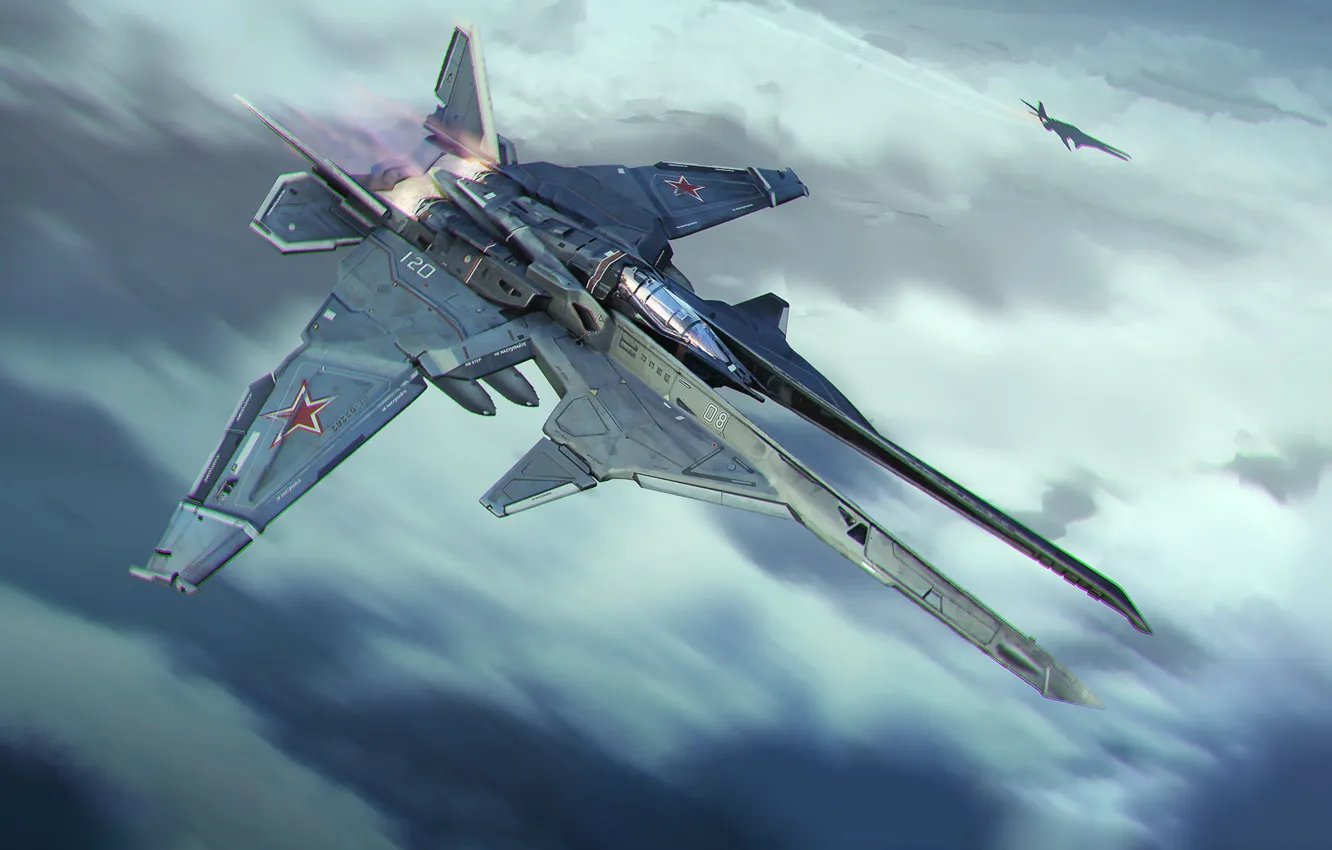
Asked before the House Armed Services Committee on Wednesday about the NGAD's price tag, Air Force Secretary Frank Kendall did not say exactly how much the private jet would cost, but said the service was talking about "several" hundreds of millions.
Future Ngad Fighter Jets Could Cost 'hundreds Of Millions' Apiece
"It's a number that catches your eye," Kendall said. "It will be an expensive plane."
Kendall said the NGAD would be "incredibly effective" but would need to be accompanied by cheaper platforms to expand the capabilities he envisions, such as autonomous unmanned wing groups.
The Air Force has no estimate of how much NGAD's autonomous wings will cost. But in a keynote speech at the March Air Force Association conference in Orlando, Florida, Kendall said the service wants those combat drones to be no more than half the size of their manned counterparts.
But the guided component of the NGAD costs several hundred million dollars, which means that the winglets could cost more than the F-35.
Boom Supersonic's Jetliner Could Join The U.s. Military
Kendall said the NGAD program is currently taking appropriate steps in its development phase to reduce long-term fixed costs. These aircraft are built using government-mandated modular designs and interfaces for easy upgrades and maintenance.
"It takes time and effort to get these things right in the earlier stages of a program like NGAD, because you pay for what you did later with bigger dollars," Kendall said. "From what I've seen of the NGAD program in the past, that's how it's been treated."
In response to D-N.J.'s concern that the NGAD schedule could be "moved to the right," Kendall said the Air Force plans to launch NGAD in the early 2030s. The service plans to continue flying the upgraded F-22s until then.
Steven Losey is Defense News' air combat correspondent. He previously covered leadership and personnel issues for Air Force Times and the Pentagon, and special operations and air warfare for Military.com. He traveled to the Middle East to cover US Air Force operations.
Bell's Valor, Sikorsky/boeing Defiant Advance In U.s. Army Future Assault Aircraft Program
L3Harris presents an experimental navigation satellite. The delivery brings the lab closer to conducting its first positioning, navigation and timing experiment in the United States in nearly 50 years.
Generative artificial intelligence like viral ChatGPT is on DISA's technology watch list An Air Force official said the military "must become more automated" to dominate the world of advanced computing and rapid solutions.
As China and Russia control the US Navy, the Navy plans to deploy Project Overmatch products later this year, particularly a carrier-based strike group with advanced networking capabilities, experts say.
The Pentagon's AI chief says data labeling is key to winning the race with China.
The Future Fighter Force Our Nation Requires: Building A Bridge
Shaw of the US Space Command sees the need for faster and faster flight, Lt. Gen. John Shaw said this week that there is a growing need for on-demand launch capabilities that could be used to replace or augment satellites. Britain and Japan have announced plans to jointly develop a prototype fighter jet engine as they both pursue targeted programs. Production of new generation combat aircraft within Tempest and F-X programs. The latest agreement is part of expanded military ties between the two countries, which also includes the exchange of air-to-air missile technology.
The UK Ministry of Defense (MOD) today announced details of the contract, a memorandum of cooperation in which an Anglo-Japanese fighter jet engine is the flagship item. Work on the joint engine demonstrator will begin early next year, with the UK investing an initial £30 million in "development of planning, digital design and innovative manufacturing".
In addition, the MOD said an additional £200 million from the UK, or about $266.6 million at conversion rates, would go towards the development of a full-scale demonstration power system to be built on Rolls. - Royce's Filton facility in Bristol, England. In addition, Mitsubishi Heavy Industries (MHI) and Ishikawajima-Harima Heavy Industries (IHI) in Japan, BAE Systems in Great Britain will participate.

Details of expected performance have not been released, and it is not clear at this stage whether the so-called demonstrator engine will be installed on a flight test site or if it will only be used for static ground tests. It is also unconfirmed at this stage whether the Tempest and F-X - if both develop as planned - will share a common engine. Both designs were planned as twin-engine fighters.
Aerodynamics Is Quietly Taking U.s. Military Aircraft To Heightened Levels Of Efficiency
"This initiative with Japan is a win-win opportunity to jointly develop the world's most powerful technologies," said Richard Burton, UK director of Future Combat Air. "Investment and cooperation with Japan will develop our national industry and develop advanced military capabilities. We look forward to starting this work and continuing discussions about future cooperation."
Under the MoU, the UK and Japan will also consider joint work on other technologies relevant to the UK's Combat Air Strategy, centered on the manned fighter jet known as the Tempest. Team Tempest also includes Italian defense contractor Leonardo, European missile consortium MBDA and Britain's Royal Air Force (RAF), as well as Rolls-Royce.
"Industrial teams in the UK and Japan will bring clean, next-generation power and complementary propulsion technologies to meet both countries' future wartime requirements," said Alex Zino, director of business development and future programs at Rolls-Royce. "The Joint Mobility Demonstration Program is an exciting opportunity to bring together the world's best combat air capabilities, while enabling the development of innovative and critical technologies that will support the future of the defense aerospace industry."
We already know quite a bit about Rolls-Royce's plans for the Tempest engine, with engineers already praising the engine's advanced technology. The company has previously described a new engine that burns hotter than its predecessors and improves efficiency. The British motor company is also working with Leonardo to channel heat generated by several onboard sensors and avionics into the engines for cooling. The Tempest team is also known to have experimented with the use of synthetic aviation fuel to lower gas temperatures and increase stability.
Decision Expected This Year On Future Path For F 35 Engine
For Japan, the latest agreement with Britain raises questions about the role of its fighter jets. MHI has completed a single prototype of the X-2 Shinshin experimental aircraft, which is being used as a technology demonstrator for its future fighter program.
The twin-engine X-2 is powered by IHI XF5 turbofans, each rated at approximately 11,000 pounds, and has thrust-vectoring intake vanes for maneuverability. The F-X was expected to eventually be powered by the existing XF9 engine, which offered significantly more power than IHI's XF5. With IHI now partnering with Rolls-Royce, it's unclear what role the XF9 will play in this.
The UK is developing the Tempest as part of its Combat Air Strategy, which at the time of writing will cost £2 billion or $2.6 billion over the next four years. According to the plan, starting from the mid-2030s, a full-fledged complex of the Future Combat Air System, including the replacement of the Typhoon combat aircraft with control, will be put into operation.
Earlier this year, the concept and evaluation phase of the UK's Future Combat Air System began with a £250 million, or roughly $333 million, contract. Like the Tempest fighter, the UK's Future Combat Air System (not to be confused with the pan-European project of the same name) includes work on drones, sensors, weapons and advanced information systems.
Hermeus: Hypersonic Aircraft Designed To Fly From Nyc To London In 90 Minutes
Meanwhile, Japan is busy with its next-generation F-X fighter program, with plans to introduce a successor in a similar timeframe to the Mitsubishi F-2.
A Royal Air Force Typhoon (left) takes part in the Northern Guard exercise alongside Japan Air Self-Defense Force F-2 fighters at Japan's Misawa Air Base.
Developing a new fighter jet is a significant undertaking, and many doubt that the UK or Japan have developed business models that can succeed without major outside support or cooperation. Considering this, it seems appropriate to combine the technological and industrial strengths of the two countries.
The coming together of Tokyo and London to develop a new power plant for their future fighters is also a manifestation of wider military cooperation between the two countries.
India's New Aircraft Carrier, Vikrant, May Get 5th Generation Fighter
Military drone range, laser range finder military, military range bags, military range targets, long range military radio, military radio range, military range finder, military long range binoculars, range rover military discount, military range rover, range of military drones, military range bag


0 Comments